What Is a PMO in Project Management?
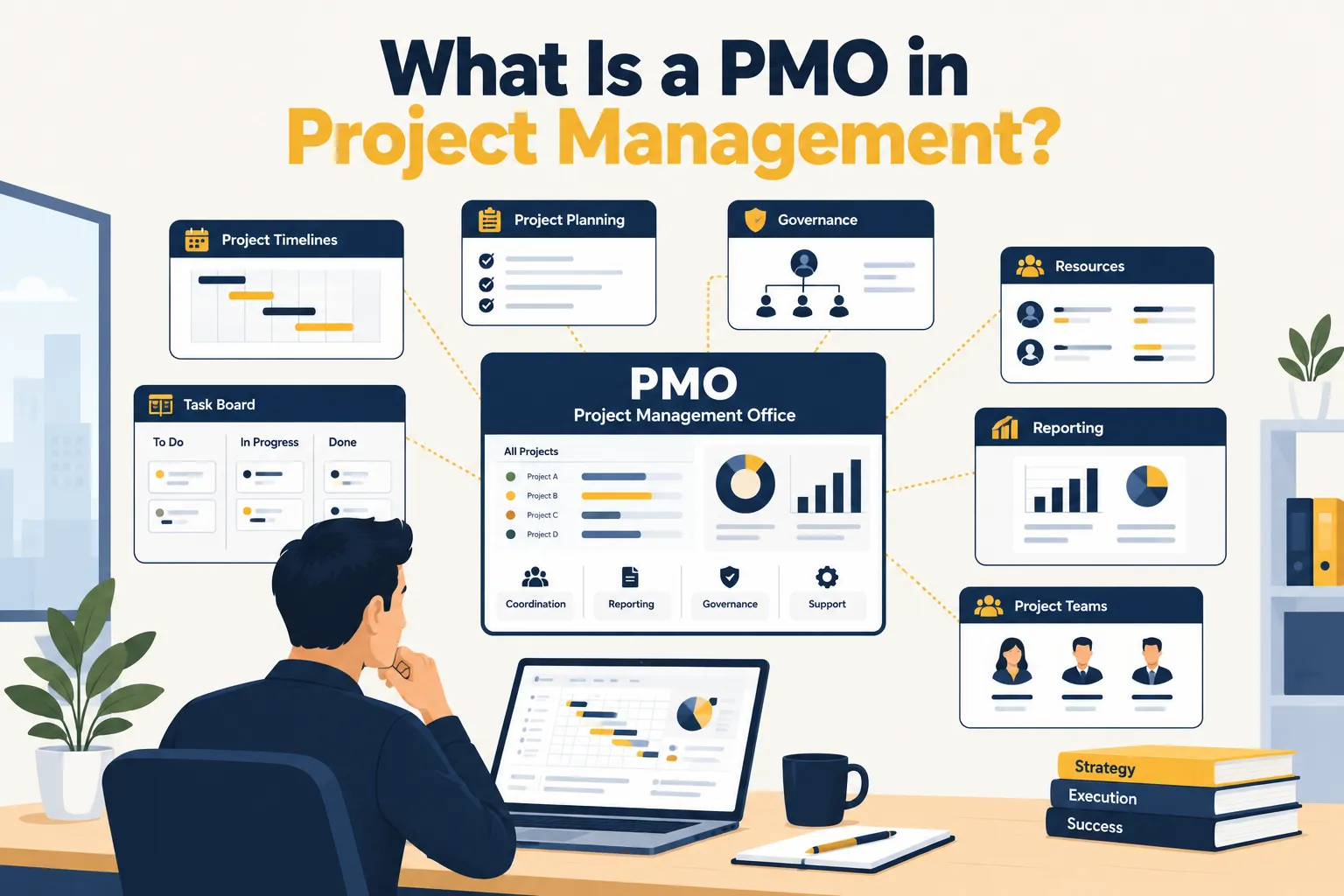
A PMO, or Project Management Office, is a team or function within an organization that helps coordinate and manage project work. Depending on the organization, a PMO may provide guidance, establish standards, monitor projects, or take a more direct management role. PMO meaning can vary when the abbreviation is used outside a professional project management context.
The purpose of a PMO is not exactly the same in every company. Some PMOs mainly support project teams, while others have authority over processes, resources, reporting, and project decisions.
What Is a PMO?
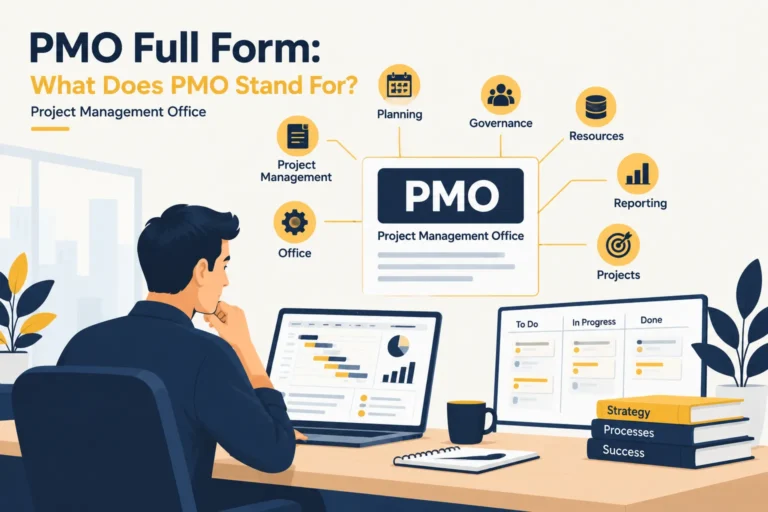
PMO stands for Project Management Office. It is an organizational function designed to create consistency in the way projects are planned, managed, monitored, and reported.
A PMO can work across multiple projects rather than focusing on just one. It may provide project teams with templates, processes, reporting standards, tools, and guidance.
In organizations with a more centralized PMO, the office may also oversee project performance, coordinate resources, and help management decide which projects should receive attention or funding.
What Does PMO Mean in Project Management?
In project management, PMO refers to the Project Management Office responsible for supporting or overseeing project-related work.
The exact responsibilities depend on how the PMO is structured. A supportive PMO may offer advice and resources, while a controlling or directive PMO may have greater authority over project teams and processes.
This means there is no single PMO structure that applies to every organization.
What Does a PMO Do?
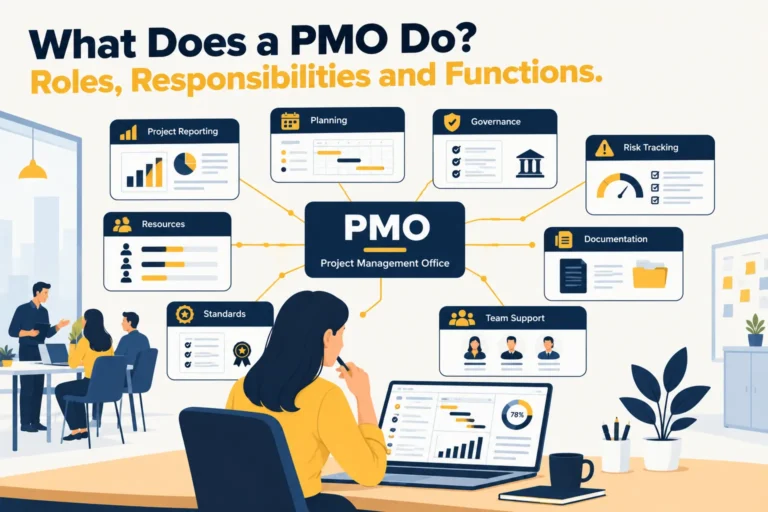
A PMO can perform many different functions depending on its responsibilities and level of authority.
Common PMO activities include:
- Creating project management standards
- Providing templates and processes
- Monitoring project progress
- Preparing project reports
- Supporting project planning
- Managing or coordinating resources
- Tracking risks and issues
- Supporting project governance
- Providing training and guidance
- Maintaining project documentation
Not every PMO performs all of these activities. Its responsibilities are normally defined by the organization’s needs and management structure.
Why Do Organizations Use a PMO?
Organizations may establish a PMO when they need more consistency across their project work.
When several teams are running projects at the same time, each team may otherwise use different processes, templates, reporting methods, or tools. A PMO can help create a common approach.
A PMO can also give management a broader view of project activity by bringing project information together in one place.
How Does a PMO Work?
The way a PMO works depends on its role within the organization.
A PMO may begin by establishing project standards and defining how teams should plan and report their work. It can then collect information from individual projects and use that information for monitoring and reporting.
For example, a PMO may require project teams to provide regular updates about schedules, risks, budgets, and major issues. The PMO can then organize this information into reports for project leaders or senior management.
PMO and Project Management
PMO and project management are closely connected, but they are not the same thing.
Project management focuses on planning and controlling the work needed to complete a specific project.
A PMO is an organizational function that can support, coordinate, standardize, govern, or directly manage project work across one or more projects.
For example, a project manager may be responsible for delivering a new website, while the PMO may provide the reporting process, project templates, governance requirements, and organizational standards used by that project manager.
PMO vs Project Manager
A PMO is also different from a project manager.
A project manager is an individual who manages a particular project. Their responsibilities can include managing the schedule, coordinating team members, communicating with stakeholders, tracking risks, and keeping the project moving toward its objectives.
A PMO is a team or organizational function. Depending on its structure, it may support several project managers or have direct responsibility for multiple projects.
| PMO | Project Manager |
|---|---|
| Organizational function | Individual role |
| Can support multiple projects | Usually responsible for a specific project |
| Creates or supports standards | Applies project management practices |
| May provide governance | Manages day-to-day project delivery |
| Can provide reporting across projects | Reports on an individual project |
The two often work together rather than operating separately.
Types of PMO
PMOs can be structured in different ways. Three commonly discussed types are supportive, controlling, and directive PMOs.
Supportive PMO
A supportive PMO provides resources, guidance, templates, training, and other forms of assistance to project teams.
It generally has limited authority over how project teams operate. Its main purpose is to help teams manage projects more effectively.
Controlling PMO
A controlling PMO has a stronger focus on standards and compliance.
It may require project teams to use specific processes, templates, reporting methods, or project management practices.
The PMO may monitor whether teams are following the organization’s established requirements.
Directive PMO
A directive PMO has a more direct role in project management.
Instead of simply supporting project managers, it may assign project managers and take responsibility for managing projects directly.
The level of authority can vary depending on the organization.
What Is a PMO Responsible For?
PMO responsibilities can cover several areas of project management.
Standards and Processes
A PMO may create standardized processes for planning, executing, monitoring, and closing projects.
Standardization can make it easier for teams to understand what information needs to be collected and how project work should be documented.
Reporting
Project reporting is another common PMO responsibility.
The PMO may collect updates from project teams and create reports showing project status, schedules, risks, issues, budgets, or other relevant information.
Governance
A PMO can help define how projects are reviewed and governed.
This may include approval processes, reporting requirements, project reviews, documentation standards, and escalation procedures.
Resource Coordination
Some PMOs help coordinate resources across projects.
This can involve tracking where employees or other resources are being used and identifying potential conflicts between projects.
Training and Support
A PMO may provide project managers and team members with training, guidance, templates, and tools.
This can help teams follow the organization’s preferred project management approach.
What Is a PMO Structure?
A PMO structure describes how the PMO is organized and how it interacts with project teams and management.
Some organizations have a centralized PMO that supports projects across the entire company. Others may have separate PMOs for individual departments, business units, programs, or portfolios.
The structure usually reflects the size of the organization, the number of projects being managed, and the level of control management wants the PMO to have.
PMO in Different Organizations
A PMO can look very different from one organization to another.
A small company might use a small PMO team that focuses mainly on project standards and reporting. A large organization with many projects may have a larger PMO responsible for governance, portfolio reporting, resource coordination, and project oversight.
There is therefore no universal list of PMO responsibilities. The function should be understood within the context of the organization using it.
What Is a PMO Team?
A PMO team consists of the people responsible for operating the Project Management Office.
Depending on the organization, the team may include PMO managers, project management specialists, analysts, coordinators, or other professionals involved in project support and governance.
The responsibilities of the team depend on the PMO’s purpose and structure.
A PMO team might maintain project documentation in one organization while managing project governance and reporting in another.
Does Every Organization Need a PMO?
No. Not every organization needs a formal PMO.
A company with only a small number of projects may be able to manage them without creating a separate PMO function. A larger organization with many projects may have more reasons to centralize project standards, reporting, and governance.
The decision depends on the organization’s project environment, management structure, and specific needs.
When Does a PMO Make Sense?
A PMO may be useful when an organization has multiple projects that need consistent processes and reporting.
It can also make sense when management needs a centralized view of project progress, risks, resources, or governance.
However, the PMO structure should match the organization. Adding unnecessary processes or approvals can make project work more complicated rather than simpler.
PMO Examples
Consider a company running several technology projects at the same time.
Without a central PMO, each project team might use different reporting formats and project processes. Management could have difficulty comparing project status across teams.
A PMO could establish a common reporting format, create project templates, define review procedures, and collect regular project updates.
The project managers would still manage their individual projects, while the PMO would provide the shared structure around them.
Common PMO Terms
Once you understand the basic PMO definition, you may encounter several related terms.
PMO Process
A PMO process refers to the procedures used to support or manage project work, such as reporting, planning, governance, and risk tracking.
PMO Governance
PMO governance refers to the structures and processes used to oversee projects and ensure that established requirements are followed.
PMO Team
A PMO team is the group of people working within the Project Management Office. Their responsibilities depend on the organization’s PMO structure.
PMO Plan
A PMO plan describes how the PMO will operate, including its responsibilities, processes, objectives, reporting, and governance approach.
Frequently Asked Questions
What is a PMO in project management?
A PMO is a Project Management Office. It is a team or organizational function that can support, standardize, govern, coordinate, or directly manage project work.
What does PMO stand for?
PMO stands for Project Management Office in a project management context.
What does a PMO do?
A PMO may create project standards, provide templates and guidance, manage reporting, support governance, coordinate resources, and monitor project information.
Is a PMO the same as a project manager?
No. A project manager usually manages an individual project, while a PMO is an organizational function that can support or oversee multiple projects.
What are the main types of PMO?
Common types include supportive, controlling, and directive PMOs. They differ mainly in the level of authority and control they have over project teams.
Does every company have a PMO?
No. Some organizations operate projects without a formal PMO, while others establish PMOs to support project standards, reporting, governance, and coordination.
Can a PMO manage projects?
Yes. Some PMOs have a direct project management role. Others mainly provide support, standards, governance, or reporting.
What is the difference between PMO and project management?
Project management focuses on delivering a specific project. A PMO is an organizational function that can support or oversee project management across multiple projects.
Final Answer
A PMO in project management is a Project Management Office that helps an organization manage project work through standards, processes, reporting, governance, resources, and support.
The exact role of a PMO varies from one organization to another. Some provide guidance and tools, while others have greater authority and directly manage projects. Understanding that difference is important when looking at how a particular PMO operates.