OnlyWorkMoods.com Guide: What It Is and Whether It Is Safe
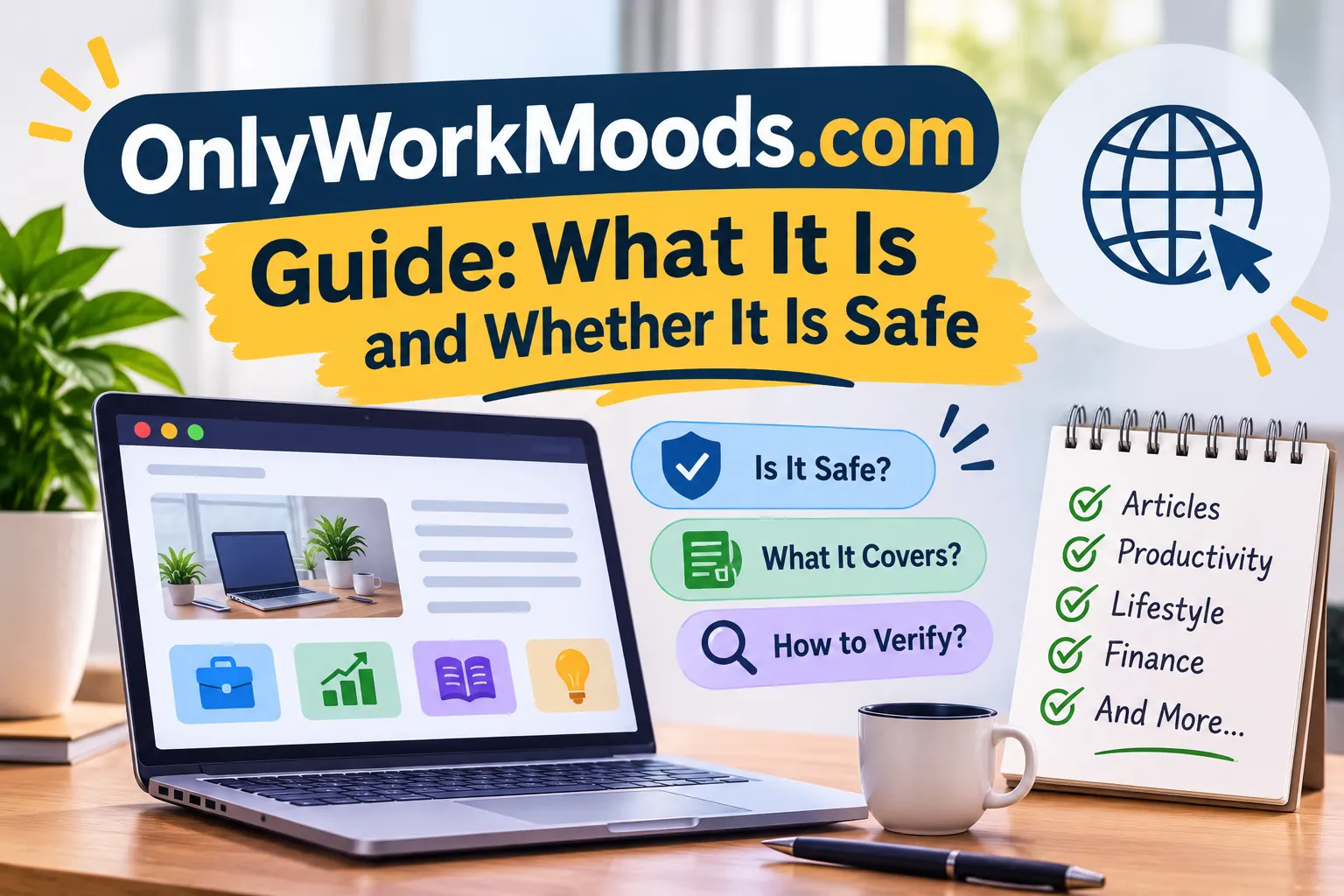
If you have landed on onlyworkmoods.com and wondered whether it is a productivity app, a mood tracker, or just a website, you are not alone. The name suggests workplace software, but the site itself works like a content publication. Visitors open articles, read them, and move on. Nothing on the homepage asks you to log a mood, set up a task list, or connect a work account.
The bigger question is whether the site is worth your time and whether it is safe to visit. The answer depends on what you need. It can be useful for light reading on work habits and everyday topics, but its ownership, author details, and depth of coverage are harder to verify than its design suggests. This guide explains what the site appears to publish, where the confusion comes from, and what to check before you rely on anything you read there.
What Is OnlyWorkMoods.com?
OnlyWorkMoods.com is an online publication built around written articles. The site groups its content into broad categories and presents each piece as a standalone page. Readers come for information rather than software features, and the basic experience is closer to reading a blog or online magazine than using a workplace tool.
Public details about the organization behind the site are limited. Founders, headquarters, leadership, funding, and revenue are not clearly disclosed in the material available for this guide. That absence does not prove anything negative, but it does mean readers have to rely on the articles themselves rather than on a company profile.
Why the Name Creates Confusion
The words “work” and “moods” naturally suggest a workplace wellbeing service. Many people expect employee mood check-ins, productivity dashboards, or stress monitoring when they first see the domain. That expectation is understandable, and it is probably the main reason the phrase onlyworkmoods com appears in so many search queries.
A useful way to separate branding from function is to compare what the name implies with what visitors actually encounter.
| What the name suggests | What visitors typically find |
|---|---|
| Mood tracker | Articles, with no confirmed mood-logging feature |
| Productivity app | Written tips on focus, habits, and work life |
| Workplace dashboard | No confirmed dashboard or reporting tools |
| Employee analytics | No evidence of workplace data collection |
| Wellness service | General lifestyle and wellbeing articles |
| Content publication | This matches the format most closely |
A name can be broader or more creative than the service behind it. Readers simply need to know what they are clicking before they decide how much to trust it.
What Kind of Content Does It Publish?
The site’s core theme is work, including productivity, focus, remote work, career habits, and workplace culture. These topics are practical because most workers face similar problems at some point. A remote employee may want help organizing the day, while a student may need better study routines. Similar questions about the identity and purpose of an online publication also arise in this article about a finance website.
The content also extends well beyond workplace advice. Competitor coverage of the site mentions lifestyle, technology, business, finance, health, travel, and general interest articles. That mix can be convenient for browsing, but it also means the site does not have one clear area of specialist expertise. Each category should be judged separately.
Strengths and Limits of the Mixed Topics
A broad publication can offer variety in one place. You can move from a short article on focus techniques to a piece about a new gadget without leaving the site. That flexibility works well for casual reading.
The trade-off is depth. A site that covers many unrelated subjects has to rely on writers with very different backgrounds, and a general tip about time management does not prove expertise in finance, medicine, or employment law. Articles in those higher-stakes areas deserve more scrutiny.
Is It a Mood Tracker or a Productivity App?
Based on the available evidence, it is neither. There is no clear sign of a personal mood diary, a daily wellbeing check-in, a sentiment dashboard, task boards, timers, or workflow tools. The word “moods” in the domain should be read as branding, not as a technical feature.
Anyone looking for software should choose a tool built for that purpose. A dedicated mood-tracking app lets you record entries and view your history over time. A project management tool lets you assign tasks and track progress. An article website does neither of these things, and expecting it to will only lead to disappointment.
Do You Need an Account?
The site does not appear to require an account for ordinary reading. Visitors can open articles and browse categories without creating a profile or handing over a password. That simplicity is useful, especially for people who prefer quick, low-commitment reading.
Websites can change over time, so the current version is what matters. A publication may add newsletters or membership options later, and it is sensible to check the sign-up options yourself before entering any personal details.
Is OnlyWorkMoods Com Safe to Browse?
Safety has several separate meanings, and it helps to keep them apart. Technical security, privacy practices, content accuracy, and the author’s expertise are different questions, and a yes or no answer to “is it safe” would blur all of them together.
On the technical side, competitor coverage reports that the site uses HTTPS, which encrypts the connection between your browser and the server. Third-party scanners have also been cited as rating the domain as very likely safe, but those tools have limitations, and their scans can be dated. A clean scan does not confirm that every article is accurate.
Practical Safety Habits
Some simple habits go a long way when you visit any unfamiliar content site:
- Confirm the exact address, since lookalike domains exist and some search results describe a similar site under a different domain.
- Avoid entering passwords you use elsewhere, and never share bank details to read a free article.
- Be cautious of pop-ups, unexpected downloads, or redirects that appear without explanation.
- Check whether the site explains its privacy practices and gives a way to contact the publisher.
How Reliable Is the Content?
Reliability should be judged article by article rather than by the domain name. A short productivity tip carries little risk if it turns out to be incomplete. A statement about tax rules, medication, or employment rights carries much more risk if it is wrong.
For any important claim, use a simple two-step check. Read the article to understand the topic, then confirm the key point with a stronger source such as a government website, a professional body, a recognized institution, or the original research. This lets you benefit from clear explanations without treating a single blog as the final authority.
Signals Worth Looking For
Before trusting a page, look for these details:
- A named author with a visible biography
- A publication or update date
- Links or references to original sources
- A clear separation between facts, opinions, and advice
- An explanation of why the information applies to your situation
If several of these are missing, treat the article as a starting point rather than a final answer.
Who Should Read It, and Who Should Look Elsewhere?
The site is likely to suit casual readers, students, early-career professionals, and anyone who enjoys short, plain-language articles about work and everyday life. Beginners may find the simple writing style easier to follow than dense specialist material.
People making serious decisions should look elsewhere. That includes readers who need guidance on medical treatment, legal rights, tax filing, investments, or professional certifications. In those areas, a general article can help you understand the question, but it should not replace a qualified professional or an official source.
How It Compares With Specialist Publications
A specialist publication focused on one field usually offers deeper research, clearer author expertise, and more consistent editorial focus. A general site like this one offers convenience and variety in exchange, while other online platforms may serve a different purpose altogether. Neither approach is better in every case. The right choice depends on whether you want a quick overview or a thorough treatment of one subject.
Limits Worth Keeping in Mind
The biggest limitation is transparency. Ownership, leadership, and the qualifications of the people writing the articles are not clearly documented in the material available for this guide. Readers should not assume that a clean design or a steady stream of articles means the site has strong editorial oversight.
Depth is another limitation. Many articles summarize a topic instead of exploring it in detail, and some competitor coverage describes older posts that have not been updated. An article written a few years ago may no longer reflect current prices, software features, or regulations, so check the publication date before acting on anything time-sensitive.
Finally, the site does not appear to offer the interactive features that its name might suggest. If you need mood tracking, employee analytics, or task management, a dedicated tool is the better choice.
Final Thoughts
OnlyWorkMoods.com is easiest to understand once you set its name aside and look at what it publishes. Its evidence points toward a broad content website rather than a mood tracker, productivity app, or workplace platform. Its articles can be useful for everyday ideas and casual learning, especially when you approach them as a starting point.
Before relying on anything important, check the author, the date, the sources, and the exact web address. Verify any claim involving money, health, law, or your career with a trustworthy primary source. That simple habit will protect you far better than any single article or safety score.
Frequently Asked Questions
Is onlyworkmoods com a productivity app?
No. It publishes articles about work, productivity, and other general topics. It does not appear to offer task boards, timers, or workflow tools.
Does OnlyWorkMoods.com track moods?
There is no clear evidence of a mood-tracking feature. The word “moods” in the name should be read as branding rather than a working tool.
Do I need to create an account to read it?
Ordinary article access does not appear to require an account. Check the current sign-up options yourself, since sites can change.
Is OnlyWorkMoods.com safe to visit?
Reported technical signals, such as HTTPS and third-party scans, are reassuring, but they do not confirm that every article is accurate. Use normal browsing precautions and avoid sharing sensitive details.
Is the information reliable?
It varies by article. Check the author, date, and sources, and confirm important health, legal, financial, or career claims with official or specialist sources.
Who is the site best suited for?
Casual readers, students, and beginners who want simple, plain-language articles on work and lifestyle topics.