PMO Process: How a Project Management Office Works
A PMO process defines how a Project Management Office supports, monitors, and manages project activities within an organization. It provides a structured approach for handling projects, setting standards, tracking progress, and keeping management informed.
The exact process depends on the organization’s size, project requirements, and the authority given to its PMO. Some offices mainly provide templates and guidance, while others take responsibility for approvals, governance, resource coordination, and project oversight.
What Is a PMO Process?
A PMO process is a set of procedures and activities used by a Project Management Office to support or oversee projects. It explains how projects are introduced, planned, monitored, reported, and managed throughout their lifecycle.
The process helps project teams follow consistent practices and gives management a clearer view of project performance. It can also define responsibilities, approval requirements, reporting schedules, and the information needed for decision-making.
A PMO process does not have to be identical in every organization. Companies usually adapt it to their project environment, internal policies, and management structure.
How Does the PMO Process Work?
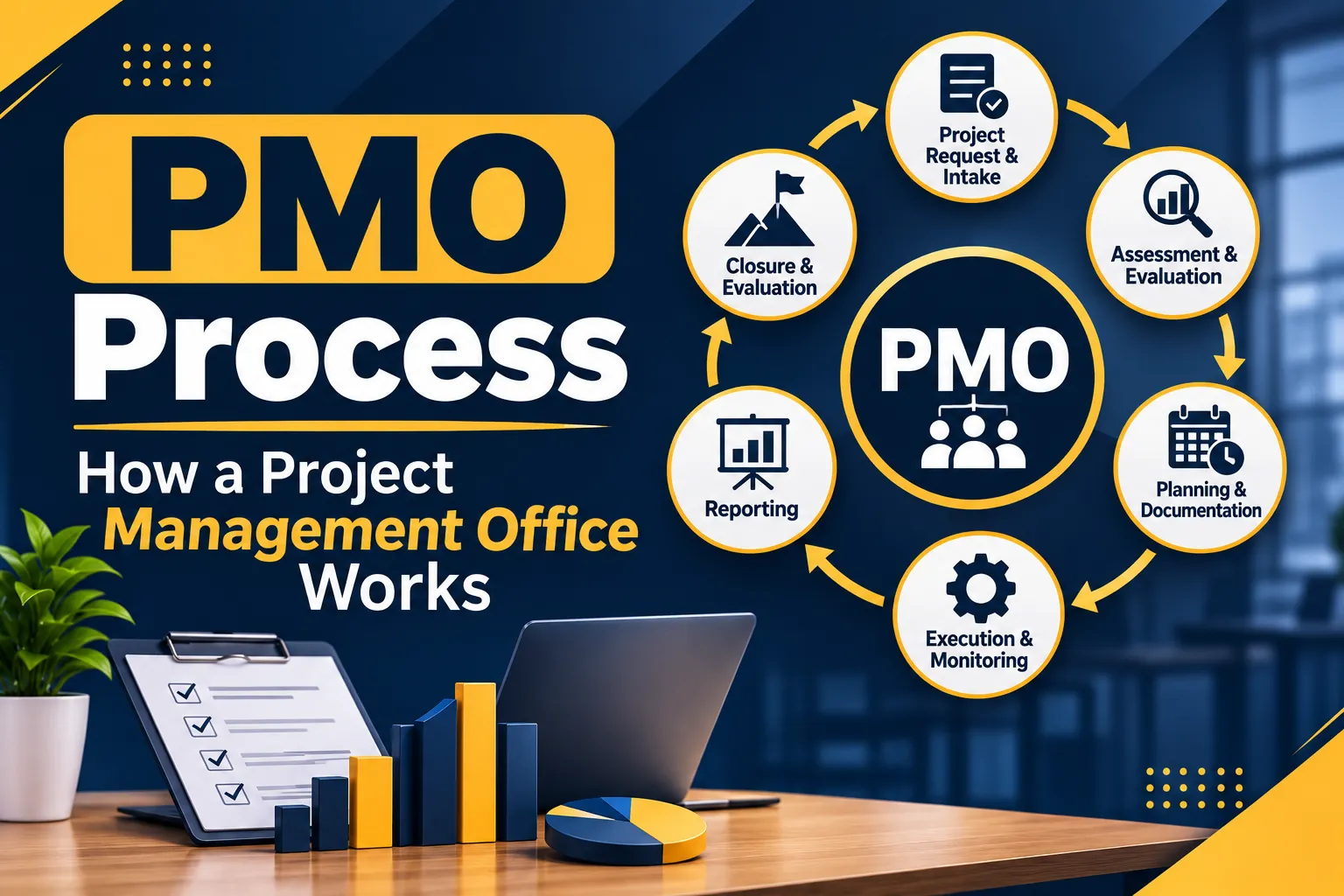
The PMO process usually follows a series of stages that help an organization manage project activity in an organized way. These stages may include project intake, evaluation, planning, approval, execution monitoring, reporting, and closure.
A typical PMO workflow looks like this:
- Project request and intake
- Initial assessment and evaluation
- Project planning and documentation
- Review and approval
- Project monitoring and reporting
- Risk and issue management
- Project closure and evaluation
Not every PMO handles all these activities directly. In some organizations, project managers complete most operational work while the PMO provides standards, guidance, and oversight.
1. Project Request and Intake
The PMO process often begins when a department or business team submits a request for a new project. The request may describe a business problem, proposed solution, expected outcome, estimated cost, and resources required.
The PMO can provide a standard project request form so that management receives consistent information. This makes it easier to understand what the project involves before committing time, budget, or employees.
At this stage, the PMO may also check whether the request includes enough information for an initial assessment.
2. Project Assessment and Evaluation
After receiving a project request, the organization may evaluate whether the proposed project should move forward. The assessment can consider its business value, estimated costs, available resources, risks, urgency, and alignment with organizational priorities.
The PMO may help collect this information and prepare it for review by the relevant decision-makers. Depending on its authority, it may also participate in prioritization or recommend whether a project should proceed.
This stage helps organizations compare project requests and identify which initiatives deserve further consideration.
3. Project Planning and Documentation
Once a project receives initial approval, the next stage involves preparing the information needed to manage it. Project planning may cover objectives, scope, deliverables, schedules, budgets, responsibilities, resources, risks, and communication requirements.
The PMO can provide templates and guidance to help project managers prepare consistent documentation. It may also check whether important project information has been recorded before execution begins.
Common planning documents include:
- Project charter
- Project management plan
- Project schedule
- Budget estimate
- Resource plan
- Risk register
- Communication plan
- Project status reporting template
The exact documents depend on the project’s size and complexity. A small internal project may require fewer records than a major business initiative involving several departments.
4. Project Review and Approval
Before project work begins, the relevant stakeholders may need to review and approve the proposed plan. The review can cover the project scope, expected benefits, budget, timeline, resource requirements, and major risks.
The PMO may coordinate this review, check documentation, and make sure the required approval steps have been followed. Final approval usually comes from the person or group with the appropriate decision-making authority.
Once the project is approved, the project team can move into execution according to the agreed plan and organizational procedures.
5. Project Execution and Monitoring
During execution, the project team works on the activities required to complete the approved deliverables. The project manager usually handles day-to-day coordination, while the PMO may monitor progress and provide support or oversight.
The PMO can collect updates about completed tasks, upcoming milestones, schedule changes, budget usage, and resource requirements. It may also compare actual performance with the approved project plan.
This information helps identify delays, resource problems, or other issues that could affect delivery. The level of PMO involvement depends on whether its role is supportive, controlling, or directive.
6. Project Reporting
Project reporting is an important part of the PMO process because it gives management a consistent view of ongoing work. Reports can summarize project progress, completed milestones, budget status, risks, issues, and decisions that require attention.
The PMO may collect updates from project managers and combine them into reports for department leaders or senior management. A common reporting format can make it easier to compare projects and identify areas that need further review.
Typical PMO reporting information includes:
- Overall project status
- Completed and upcoming milestones
- Schedule performance
- Budget and spending updates
- Current risks and issues
- Resource requirements
- Pending decisions
- Corrective actions
The reporting frequency can vary. Some projects may require weekly updates, while others may use monthly reporting depending on their size and management requirements.
7. Risk and Issue Management
Risks and issues can affect project schedules, costs, resources, and expected outcomes. The PMO may establish procedures for recording, assessing, monitoring, and escalating these concerns.
Project managers generally remain responsible for managing risks and issues within their projects. The PMO can support this work by providing a common risk register, reporting standards, and escalation procedures.
When a problem affects several projects or requires a management decision, the PMO may help bring it to the attention of the appropriate stakeholders.
8. Resource Coordination
Projects often compete for the same employees, equipment, budgets, and specialist skills. A PMO may help track resource requirements and provide management with information about availability and potential conflicts.
For example, two departments may need the same technical specialist during the same period. The PMO can make the conflict visible so that managers can review priorities and decide how resources should be allocated.
The PMO’s authority over resource decisions varies. Some offices only report resource requirements, while others participate more directly in resource planning and coordination.
9. Project Governance and Change Control
Project governance defines how decisions are made, responsibilities are assigned, and project performance is reviewed. The PMO may support governance by maintaining approval procedures, reporting requirements, review schedules, and escalation rules.
Change control is another important activity. When a project requires changes to its scope, schedule, budget, or deliverables, the organization may use a formal process to assess and approve those changes.
The PMO can help document proposed changes and make sure the appropriate people review them. This reduces the risk of important project decisions being made without proper visibility.
10. Project Closure and Evaluation
The PMO process does not necessarily end when the project team completes its main activities. Project closure may involve confirming deliverables, obtaining final approvals, closing documentation, and recording lessons learned.
The PMO may help ensure that project records are complete and that the final status is reported to management. It can also collect feedback about what worked well and what could be improved in future projects.
These lessons can be shared with other project teams and used to improve organizational processes over time.
PMO Process Flow
The stages of a PMO process can be viewed as a connected workflow. Each stage provides information or decisions needed for the next one.
| Stage | Main Activity | Expected Output |
|---|---|---|
| Project intake | Receive project requests | Project request |
| Assessment | Evaluate business needs and feasibility | Initial assessment |
| Planning | Define scope, schedule, budget, and resources | Project plan |
| Approval | Review and authorize the project | Approved project |
| Execution | Complete planned project activities | Project deliverables |
| Monitoring | Track progress, risks, and performance | Status updates |
| Reporting | Share project information with management | Project reports |
| Closure | Confirm completion and document lessons | Closure report |
Organizations may combine or adjust these stages according to their project management methods. The purpose is to maintain a clear process for handling project work and keeping the right people informed.
What Are the Main PMO Process Activities?
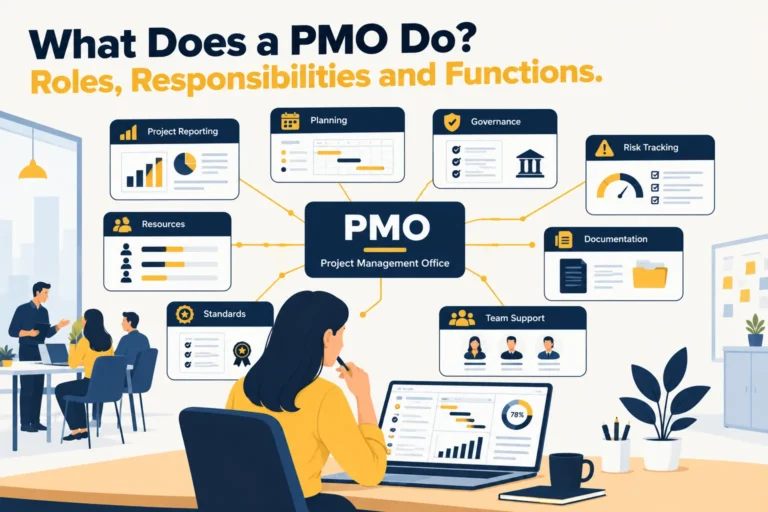
Although the workflow can differ between companies, several activities are commonly associated with a PMO. These activities help create consistency and provide management with useful information.
| PMO Activity | Purpose |
|---|---|
| Project intake | Organize and record new project requests |
| Project planning | Support consistent project plans and documentation |
| Project standards | Define common procedures and templates |
| Reporting | Provide visibility into project progress |
| Governance | Support approvals and management oversight |
| Risk tracking | Monitor potential problems and existing issues |
| Resource coordination | Identify resource needs and conflicts |
| Project closure | Record completion and lessons learned |
The PMO may perform these activities directly or provide guidance to the people responsible for them. Its involvement depends on the office’s role and authority.
PMO Process vs Project Management Process
The PMO process and project management process are connected, but they are not exactly the same. Project management focuses on planning and delivering a specific project, while the PMO process explains how the office supports or oversees project management across an organization.
| PMO Process | Project Management Process |
|---|---|
| Supports or oversees multiple projects | Focuses on an individual project |
| Establishes or maintains common standards | Applies suitable project management methods |
| May consolidate project reporting | Tracks and reports project progress |
| Supports organizational governance | Manages project-level decisions |
| May coordinate resources across projects | Manages resources assigned to the project |
For example, a project manager may prepare a schedule for a software implementation project. The PMO may provide the required planning template, monitor reporting, and include the project’s progress in an organizational report.
Who Is Responsible for the PMO Process?
Responsibility for the PMO process usually sits with the PMO manager or the team responsible for the Project Management Office. However, project managers, department heads, senior management, and other stakeholders may also participate.
The PMO manager may oversee standards, reporting, governance, and the overall operation of the office. Project managers usually handle the day-to-day work involved in delivering their assigned projects.
The division of responsibilities should be clear so that teams understand who prepares information, who reviews it, and who has authority to make decisions.
How Do You Create a PMO Process?
Creating a PMO process starts with understanding how the organization currently manages projects and where improvements are needed. The goal should be to develop procedures that solve real problems without adding unnecessary administration.
A practical starting point includes these steps:
- Define the PMO’s purpose: Identify what the office is expected to support or oversee.
- Understand project requirements: Review the types, sizes, and complexity of projects the organization manages.
- Set responsibilities: Clarify the roles of the PMO, project managers, and decision-makers.
- Establish project standards: Create suitable templates, reporting formats, and documentation requirements.
- Define approval procedures: Decide how projects and major changes will be reviewed.
- Set reporting requirements: Establish what information teams need to provide and how often.
- Introduce the process: Explain the procedures to project teams and provide necessary training.
- Review and improve: Collect feedback and adjust the process when it creates unnecessary work or fails to meet business needs.
A smaller organization may begin with basic project intake, planning, and reporting procedures. More complex governance and resource coordination can be introduced when there is a clear need for them.
Common PMO Process Challenges
A PMO process can become difficult to manage when its procedures are unclear or do not match the organization’s working environment. Too much administration can also make project teams spend more time preparing reports than completing project work.
Common challenges include:
- Unclear responsibilities between the PMO and project managers
- Inconsistent project information
- Reporting requirements that are too complicated
- Limited support from senior management
- Poor communication between departments
- Resource conflicts across projects
- Approval procedures that delay project work
- PMO standards that do not match actual project needs
These problems can often be reduced by defining responsibilities clearly, keeping reporting practical, and reviewing whether the process is helping project teams.
How Does the PMO Process Improve Project Management?
A well-designed PMO process can make project information easier to organize and understand. Common standards and reporting procedures help management compare progress, identify problems, and make informed decisions.
It can also support better coordination when several teams are working on related projects or competing for the same resources. Project managers can receive consistent guidance, while senior leaders gain a clearer view of ongoing work.
The results depend on how the PMO is implemented. A process that is too complicated or disconnected from business needs may create extra work without improving project management.
Does Every Organization Need a Formal PMO Process?
No. A company managing a small number of straightforward projects may not need a separate PMO or a detailed set of procedures. Existing managers may be able to handle planning, reporting, and coordination without creating another organizational function.
A formal PMO process can become more useful when an organization manages many projects, works across several departments, or needs consistent reporting and governance. The process should grow according to the organization’s requirements rather than introducing unnecessary rules.
Frequently Asked Questions
What is a PMO process?
A PMO process is a set of procedures used by a Project Management Office to support or oversee projects. It can cover project intake, planning, approvals, monitoring, reporting, governance, and closure.
What are the main steps in a PMO process?
Common steps include project intake, assessment, planning, approval, execution monitoring, reporting, risk management, and project closure. The exact workflow varies by organization.
What is a PMO workflow?
A PMO workflow describes how project information and activities move through the Project Management Office. It may show how requests are submitted, reviewed, approved, monitored, and closed.
Who manages the PMO process?
The PMO manager or PMO team usually coordinates the process. Project managers and senior stakeholders also participate according to their responsibilities and decision-making authority.
What is the difference between a PMO process and a project management process?
A PMO process explains how the office supports or oversees project management across an organization. A project management process focuses on the activities involved in delivering an individual project.
What documents are used in a PMO process?
Common documents include project request forms, project charters, project plans, schedules, risk registers, status reports, change requests, and closure reports. The documents required depend on the organization’s procedures.
Why is a PMO process important?
A PMO process can help organizations maintain consistent project practices, improve reporting, monitor risks, and coordinate work across teams. Its value depends on how well it supports actual business needs.
Can a small business use a PMO process?
Yes. A small business can use basic PMO procedures without establishing a large department. Simple project request forms, planning templates, and regular progress reports may be enough for its needs.
Final Answer
A PMO process explains how a Project Management Office supports and oversees project activities within an organization. It commonly covers project intake, assessment, planning, approval, execution monitoring, reporting, risk management, governance, and closure.
The process helps create consistent ways to manage project information and keep management informed. However, its structure should match the organization’s size, project requirements, and level of PMO authority.
A useful PMO process provides enough structure to support project teams without creating unnecessary administrative work.