Sports Harmonicode: Meaning, Technology, Benefits, and How It Works
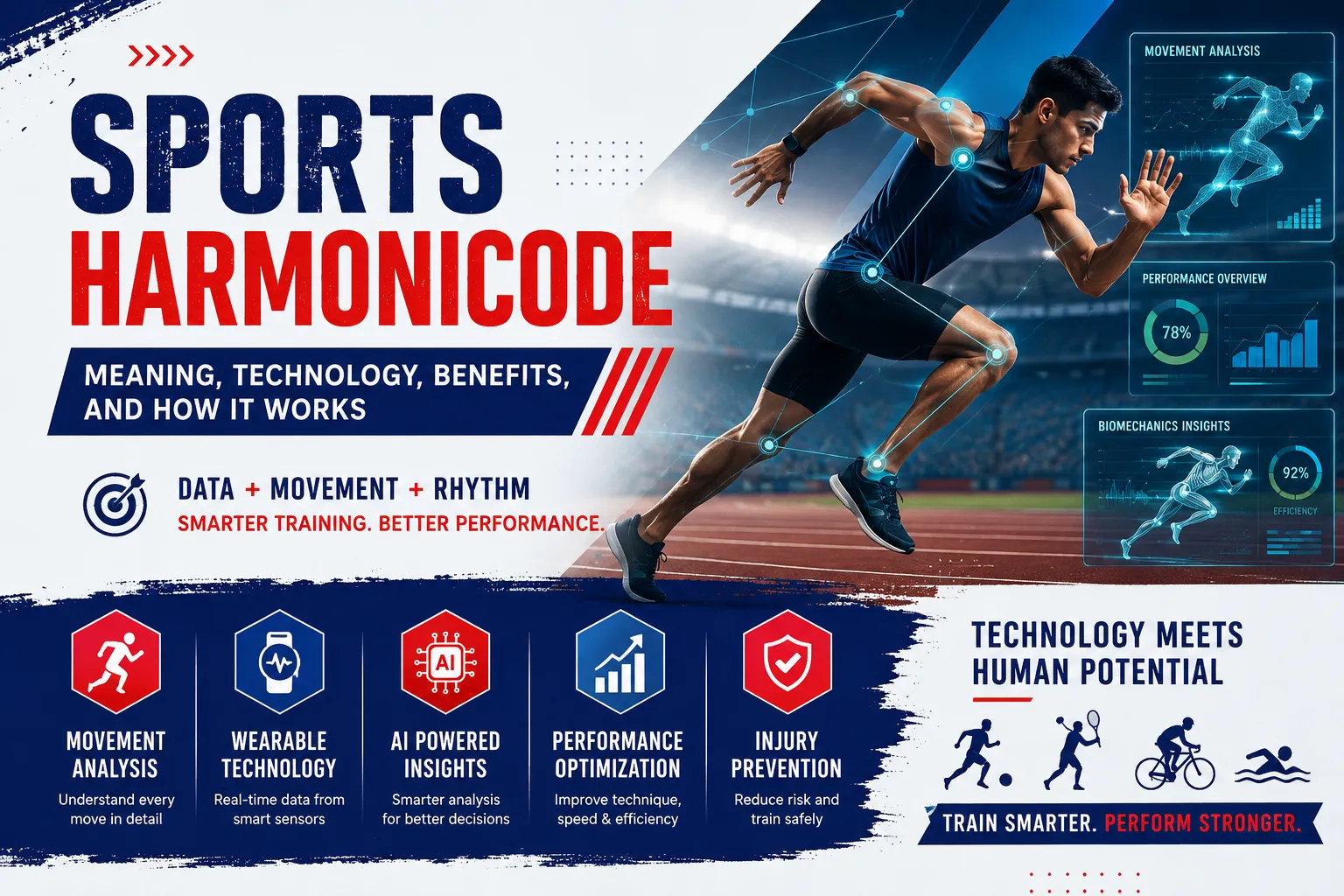
Sports Harmonicode is a term appearing in online discussions about athletic performance, movement patterns, sports technology, and data-driven training. It is commonly associated with ideas such as biomechanics, artificial intelligence, wearable sensors, motion tracking, and rhythmic movement analysis. The basic concept is to understand how athletes move, identify patterns in their performance, and use technology to make training more informed.
However, Sports Harmonicode does not currently have one universally accepted scientific definition. Some websites describe it as a sports technology platform, while others explain it as an approach that connects movement, rhythm, and performance analytics. Understanding this difference is important because the technologies mentioned alongside the term are real, but that does not automatically prove that every feature or benefit attributed to Harmonicode is established.
What Is Sports Harmonicode?
Sports Harmonicode is an emerging online term associated with the relationship between sports, movement analysis, data science, and digital technology. It is generally used to describe ideas that examine athletic movements and identify patterns that may help athletes and coaches understand performance.
The concept is often explained through two main ideas:
- Sports: Physical activities, athletic training, competition, movement, and performance.
- Harmonicode: A term associated online with patterns, rhythm, coordination, and the use of digital systems to interpret information.
Together, these ideas suggest a way of examining athletic performance through movement patterns and technology.
For example, a runner’s stride, a basketball player’s jumping technique, or a tennis player’s swing involves timing, balance, coordination, and repeated physical movements. Sports technology can collect information about these actions and help coaches understand where improvements may be possible.
It is important to distinguish the broader concept from a verified commercial product. Although online descriptions associate Sports Harmonicode with AI and wearable technology, its exact technical framework and independently demonstrated results have not been clearly established.
How Does Sports Harmonicode Work?
The way Sports Harmonicode is described depends on the source. Most explanations connect it with collecting information about athletic movement and using software to interpret that information.
A technology-assisted approach to sports performance could involve several stages.
1. Collecting Movement Data
The first step is collecting information about an athlete’s physical movements. Depending on the sport and technology being used, this may involve wearable sensors, cameras, smartphones, or motion-tracking equipment.
These tools can record information such as movement speed, acceleration, body position, and changes in physical activity.
For example, a wearable device may record how quickly a runner accelerates during a training session. A camera-based system may help a coach examine the position of an athlete’s body during a jump or exercise.
2. Identifying Movement Patterns
After collecting information, software can help identify repeated movements and differences between training sessions.
This is where the idea of harmonicode sports is often connected with rhythm and coordination. Athletic movements are not random actions. They involve timing and repeated patterns that can influence how efficiently an athlete performs.
A coach may compare an athlete’s running technique across multiple sessions to identify changes in stride consistency or movement control.
3. Analysing Performance Information
Sports analytics involves examining collected information to understand performance. Depending on the available measurements, analysis may include speed, distance, reaction time, movement consistency, and training workload.
Artificial intelligence and machine learning can also be used in sports applications to process large amounts of information and identify patterns.
However, these are established technology applications, not proof that every system described as Sports Harmonicode uses them.
4. Providing Feedback
The final stage is using the analysis to support training decisions. Coaches and athletes may review performance information, identify areas that need attention, and adjust exercises or techniques.
Feedback can be useful when it is based on accurate measurements and interpreted correctly. Technology should support coaching decisions rather than replace professional judgment.
Main Features Associated With Harmonicode Sports
Online explanations frequently connect Harmonicode Sports with several sports technology features. These features are better understood as possible applications of the broader concept rather than confirmed specifications of one standardized platform.
Biomechanics and Movement Analysis
Biomechanics is the scientific study of movement and the forces involved in physical activity. It helps researchers and coaches understand how the body moves during sports and exercise.
For example, biomechanics can be used to examine running technique, joint movement, jumping mechanics, and body positioning.
Some descriptions of Sports Harmonicode connect the term with this field because movement patterns are central to athletic performance.
Motion Tracking
Motion tracking involves recording and examining physical movement. Cameras, wearable sensors, and specialized software can help capture information about an athlete’s actions.
In sports training, motion tracking may help identify differences in technique, posture, coordination, and movement consistency. Wearable technology also plays a role in monitoring physical activity, including devices designed for use during activities such as swimming.
The usefulness of the information depends on the quality of the equipment, the accuracy of the measurements, and how the results are interpreted.
Artificial Intelligence and Data Analysis
Artificial intelligence is increasingly used in sports technology to process performance information. Machine learning systems can examine patterns in large datasets and help identify changes that may be difficult to notice manually. These developments are part of wider changes in technology, where digital tools and data analysis are influencing different industries.
For example, an analytics system might compare training sessions and highlight changes in running speed or movement patterns.
Some online descriptions associate Sports Harmonicode with AI-driven insights. However, the availability of AI features in a particular product should be verified through its technical documentation.
Rhythm and Coordination
Rhythm is important in many sports. Running requires consistent strides, swimming involves coordinated movements, and racket sports depend heavily on timing.
Training exercises can use rhythmic cues to help athletes practise consistent movement and improve coordination.
This connection helps explain why some websites use the term harmonicode when discussing the relationship between rhythm and athletic performance.
Performance Monitoring
Performance monitoring involves collecting information over time to understand how an athlete responds to training.
Depending on the equipment, this may include activity levels, training duration, movement speed, and other measurable indicators.
Regular monitoring can help coaches compare sessions and make more informed adjustments.
Potential Benefits of Sports Harmonicode
The benefits associated with Sports Harmonicode are usually connected to the wider advantages of sports technology, movement analysis, and structured training. These should not be interpreted as proven results from a specific Harmonicode system.
Better Understanding of Athletic Performance
Performance data can help athletes and coaches understand strengths and weaknesses. Instead of relying entirely on observation, they can review measurable information from training sessions.
This may make it easier to identify changes in technique, consistency, and physical performance.
Improved Movement Awareness
Movement analysis can help athletes understand how their bodies perform specific actions. For example, a runner may examine stride patterns, while a tennis player may review the mechanics of a serve.
Greater awareness can support technique development when combined with appropriate coaching.
More Informed Training Decisions
Tracking performance over time gives coaches additional information when planning training sessions.
If measurements show changes in workload, movement quality, or consistency, coaches can consider whether the training programme needs adjustment.
Support for Injury Prevention
Sports technology can help monitor certain movement patterns and training loads that may be relevant to injury risk.
However, no technology can guarantee that an athlete will avoid injuries. Injury prevention involves several factors, including physical conditioning, recovery, technique, workload management, and individual health considerations.
Claims that Sports Harmonicode specifically reduces injuries should therefore be treated cautiously unless supported by independent research.
Useful Feedback for Coaches and Athletes
Performance information can make communication between coaches and athletes more specific. Rather than giving only general instructions, coaches may use recorded measurements or video analysis to explain where a technique needs improvement.
Sports Harmonicode and Artificial Intelligence
Artificial intelligence is one of the technologies frequently mentioned in discussions about Sports Harmonicode.
AI can help sports applications process information collected from cameras, wearable devices, and other monitoring equipment. Depending on the system, it may identify movement patterns, compare performance data, or generate reports.
For example, an AI-powered sports analysis application could examine video footage of a football player and help identify changes in running technique. Another system might compare an athlete’s training measurements over several weeks.
These applications demonstrate how AI can support sports performance analysis. They do not establish that a particular Harmonicode platform has all these capabilities.
Anyone evaluating a product using this name should look for technical documentation, actual demonstrations, and independent evidence rather than relying only on general AI-related descriptions.
Sports Harmonicode vs Traditional Sports Training
Traditional sports training and technology-assisted training are not necessarily competing approaches. Both can contribute to athletic development, and many modern training programmes combine physical practice with performance monitoring.
| Area | Traditional Sports Training | Technology-Assisted Approach |
|---|---|---|
| Performance evaluation | Coaching observation and physical tests | Measurements, recordings, and data analysis |
| Movement analysis | Visual assessment and practical feedback | Video analysis and motion tracking |
| Training feedback | Instructions from coaches | Coaching combined with digital reports |
| Progress monitoring | Training records and assessments | Recorded measurements over time |
| Main purpose | Develop physical ability and technique | Add measurable information to training decisions |
Technology can provide additional information, but it cannot replace the experience of a qualified coach or the importance of consistent practice.
Is Sports Harmonicode a Real Sport or a Technology Concept?
Sports Harmonicode is better described as an emerging online concept associated with sports technology rather than an officially recognized sport.
Recognized sports generally have established rules, governing organizations, competitions, and clear participation structures. There is currently insufficient verified information to establish Sports Harmonicode as a separate sport with comparable structures.
The term is also used in descriptions of sports analytics, biomechanics, and technology-assisted training. These are legitimate areas of sports science and technology, but they should not be confused with proof of a standardized Harmonicode method.
Similarly, websites presenting Harmonicode as a commercial platform should be evaluated individually. A website’s description does not independently verify its technology, ownership, performance claims, or commercial services.
Who Can Be Interested in Sports Harmonicode?
The ideas associated with Sports Harmonicode may interest different groups involved in sports and physical activity.
- Athletes: People interested in understanding movement, technique, and performance measurements.
- Coaches: Professionals who use training observations and performance information to guide athletes.
- Sports researchers: Individuals studying biomechanics, movement patterns, and sports performance.
- Fitness enthusiasts: People interested in wearable technology and activity tracking.
- Sports technology developers: Teams working on software, sensors, and digital tools for athletic applications.
The usefulness of any technology depends on the specific tool, the user’s goals, and the reliability of its measurements.
What Should You Check Before Using a Sports Harmonicode Platform?
If you find a website or service presenting itself as Sports Harmonicode, it is important to understand what it actually offers.
Consider these checks before creating an account, purchasing a subscription, or sharing personal information.
- Check the company information: Look for the organization’s name, contact details, and information about the people responsible for the service.
- Review the features: Confirm which tools are actually available instead of relying on broad descriptions of AI, biomechanics, or performance analysis.
- Look for technical documentation: A credible service should explain how it collects information, what it measures, and how it processes the results.
- Check privacy practices: Sports applications may collect activity or movement data. Understand how this information is stored and used.
- Look for independent evidence: Performance and injury-prevention claims should be supported by reliable testing or research.
- Avoid guaranteed results: Be cautious of services promising guaranteed athletic improvements or scientifically proven outcomes without providing supporting evidence.
These checks help distinguish a genuine sports technology service from a website that mainly uses technical language for promotion.
The Future of Sports Harmonicode
The broader ideas associated with Sports Harmonicode reflect developments in sports technology. Wearable devices, motion tracking, artificial intelligence, and performance analytics are becoming increasingly relevant to how athletes train and how coaches evaluate performance.
Future sports applications may combine information from multiple sources to provide more detailed views of movement and training progress. Improvements in sensors and data analysis could also make performance monitoring more accessible to amateur athletes.
However, the future potential of sports technology should be separated from claims about a specific product or system. For Sports Harmonicode to become an established method, its meaning, technical approach, and measurable results would need clearer documentation and independent validation.
For now, it is most accurate to understand the term through its connection with broader sports technology concepts.
Frequently Asked Questions About Sports Harmonicode
What is Sports Harmonicode in simple words?
Sports Harmonicode is an online term associated with athletic movement, rhythm, biomechanics, and technology-assisted performance analysis. It does not currently have one universally accepted scientific definition.
Is Harmonicode Sports an officially recognized sport?
There is insufficient verified evidence that Harmonicode Sports is an officially recognized sport with standardized rules, a governing organization, and established competitions. It is more commonly discussed as a sports technology concept.
Does Sports Harmonicode use artificial intelligence?
Some online descriptions associate Sports Harmonicode with artificial intelligence and machine learning. These technologies can be used in sports analytics, but the availability of specific AI features in a Harmonicode product needs independent verification.
Can Sports Harmonicode improve athletic performance?
Movement analysis, performance monitoring, and structured training can help athletes and coaches make informed decisions. However, there is not enough independent evidence to attribute specific performance improvements to a standardized Sports Harmonicode system.
What is the connection between Sports Harmonicode and biomechanics?
Biomechanics examines how the human body moves and how physical forces affect movement. Sports Harmonicode is sometimes associated with biomechanics because online descriptions connect it with analysing athletic movement, balance, and coordination.
What equipment is associated with Sports Harmonicode?
There is no universally established equipment requirement. The broader technologies discussed alongside the term include wearable sensors, smartphones, cameras, motion-tracking equipment, and sports analysis software.
Is Sports Harmonicode the same as sports analytics?
No. Sports analytics is an established field that involves collecting and interpreting information about sports performance. Sports Harmonicode is a less standardized online term sometimes associated with analytics and movement analysis.
Conclusion
Sports Harmonicode is an emerging term connected with discussions about athletic movement, rhythm, biomechanics, artificial intelligence, and sports performance technology. Its central idea is to understand how athletes move and how data or digital tools could support training decisions.
The technologies commonly mentioned alongside it have practical applications in modern sports. However, Sports Harmonicode itself does not yet have one universally accepted definition or a clearly established scientific framework. Readers should distinguish genuine sports technology from unverified claims about a particular platform or method.