What Does PMO Mean in Business?

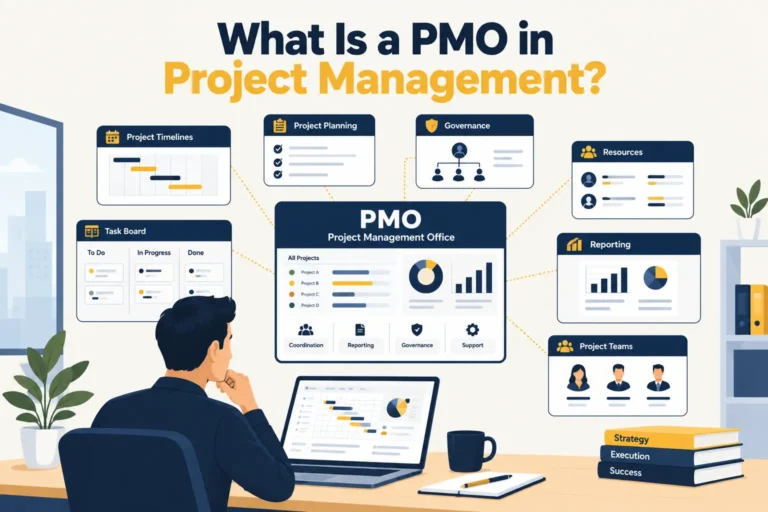
In business, PMO usually stands for Project Management Office. It refers to a department or organizational function that helps manage projects, establish consistent processes, monitor performance, and support business objectives.
Companies use a PMO to bring more structure to project management. Depending on its responsibilities, it may provide guidance to project teams, oversee reporting, manage project standards, or coordinate several projects across the organization.
What Does PMO Stand For in Business?
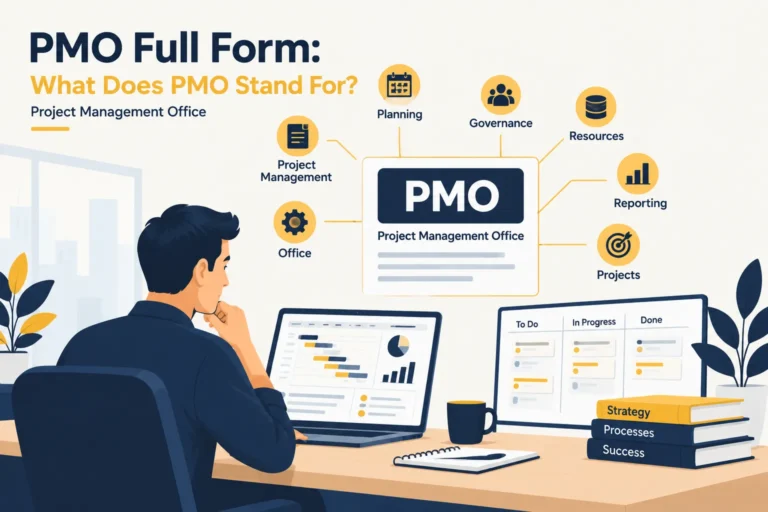
PMO stands for Project Management Office in most business and corporate project management contexts. It is a centralized function that helps an organization organize and manage its projects more consistently.
The specific responsibilities depend on the company’s structure and the authority given to the PMO. Some offices mainly provide templates and guidance, while others have responsibility for project governance, resource coordination, and performance monitoring.
In business discussions, the term PMO may also refer to the people working within this function or the management structure they support.
What Is a Project Management Office?
A Project Management Office is a department, team, or organizational function responsible for supporting or overseeing project management activities. Its purpose is to help projects follow appropriate processes and provide management with useful information about their progress.
A PMO can work with individual project managers, department leaders, senior management, and other business teams. Its position within the organization depends on how the company chooses to manage its projects.
For a broader explanation of the concept, see our article on what a PMO is in project management.
What Does a PMO Do in a Business?
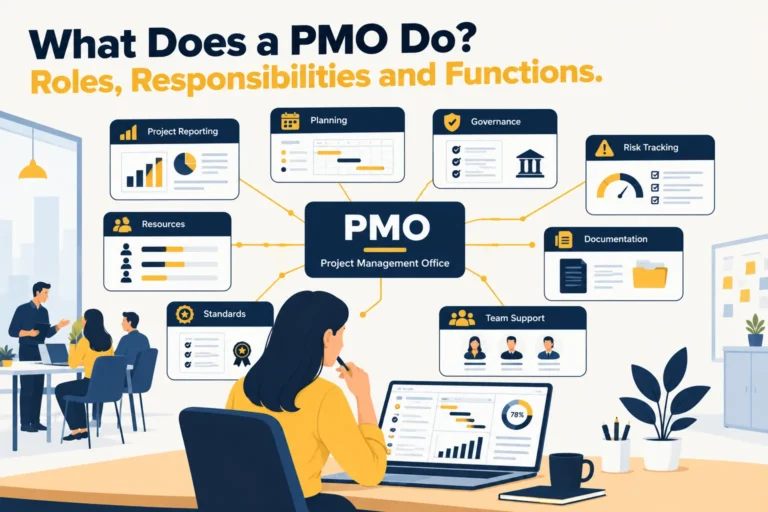
A PMO can perform several functions depending on the organization’s needs. Its work often involves creating project standards, organizing information, monitoring progress, and helping teams manage their responsibilities.
1. Establishes Project Management Standards
A PMO can create common procedures that project teams are expected or encouraged to follow. These may include project planning templates, reporting formats, documentation requirements, and approval processes.
Having shared standards can make it easier for management to understand how projects are being handled across different departments.
2. Monitors Project Progress
A PMO may collect updates from project managers and prepare reports showing whether projects are meeting their planned milestones. These reports can include information about schedules, budgets, risks, issues, and overall progress.
This gives business leaders a clearer view of project performance and helps them identify areas that may need attention.
3. Supports Resource Planning
Projects often depend on employees, budgets, equipment, and other resources. A PMO may help coordinate these requirements and provide information about resource availability.
In organizations managing several projects, this support can help managers identify resource conflicts and understand where additional capacity may be needed.
4. Helps Manage Risks and Issues
A PMO can help project teams identify, document, and monitor risks that could affect project delivery. It may also maintain issue logs and reporting procedures so that important problems are visible to the relevant managers.
The PMO’s involvement in resolving risks and issues depends on its authority. In some companies, it provides guidance, while in others it may support escalation and management decisions.
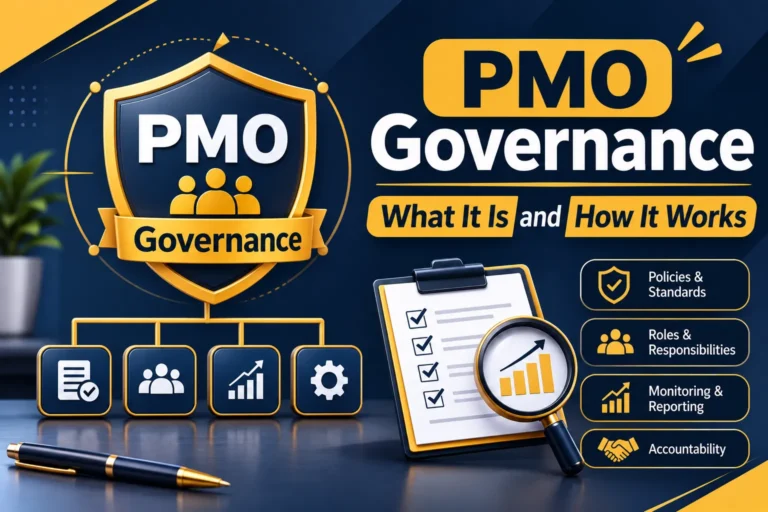
5. Supports Project Governance
Project governance refers to the processes used to guide, monitor, and control projects. A PMO may help establish approval procedures, reporting requirements, responsibilities, and decision-making structures.
These arrangements help clarify who is responsible for different project decisions and how project performance is reviewed.
6. Provides Tools and Training
Some PMOs help employees use project management software, templates, and reporting systems. They may also provide training or guidance on project management methods and internal procedures.
This support can help project teams understand the company’s expectations and use consistent approaches when managing their work.
Why Do Businesses Need a PMO?
Businesses may establish a PMO when they manage several projects and need better coordination, reporting, or control. Without a shared approach, different teams may use separate processes, making it harder for management to compare project performance.
A PMO can provide a central point for project information and help the organization maintain consistent management practices. It can also support communication between project teams and senior leadership.
Common reasons businesses establish a PMO include:
- Improving project reporting and visibility
- Creating consistent project management processes
- Supporting better resource coordination
- Monitoring project risks and issues
- Strengthening project governance
- Helping management understand project performance
- Coordinating related projects and programs
A PMO does not automatically solve every project management problem. Its value depends on whether its responsibilities match the organization’s actual needs.
PMO Roles and Responsibilities in Business
The responsibilities of a PMO can vary considerably between companies. A small business may have a limited project support function, while a larger organization may maintain a dedicated team with responsibilities across multiple departments.
Common PMO responsibilities include:
| Responsibility | What It Involves |
|---|---|
| Project planning | Supporting schedules, plans, and project documentation |
| Reporting | Collecting updates and preparing progress reports |
| Governance | Supporting project standards and approval processes |
| Resource coordination | Helping track resource requirements and availability |
| Risk management | Monitoring project risks and issues |
| Documentation | Maintaining project records and templates |
| Performance monitoring | Tracking milestones, budgets, and progress |
| Project support | Providing guidance, tools, and training |
The people responsible for these activities may include PMO managers, project management analysts, coordinators, and project support specialists. Their exact job titles and duties depend on the organization.
For more detail about these functions, read our article on what a PMO does and its responsibilities.
Types of PMO Used in Business
Not every business PMO operates in the same way. Some focus on supporting project teams, while others have more authority over project processes and delivery.
Three common types are supportive, controlling, and directive PMOs.
Supportive PMO
A supportive PMO provides project teams with guidance, templates, tools, training, and other resources. It generally has limited authority over how individual projects are managed.
This structure can suit businesses where project managers already have control over their projects but need shared resources and recommendations.
Controlling PMO
A controlling PMO establishes project management standards and checks whether teams follow required procedures. It may define reporting formats, documentation rules, and approval processes.
Businesses may use this structure when they need more consistency and oversight across their projects.
Directive PMO
A directive PMO takes a more active role in project management. It may assign project managers, direct project teams, and take responsibility for project delivery.
This structure gives the PMO greater authority over how projects are managed.
PMO vs Business Management
A PMO and general business management have different responsibilities, although their work can overlap.
Business management covers the wider operation of a company, including areas such as finance, sales, marketing, human resources, and organizational strategy. A PMO has a more specific focus on project management and the processes used to oversee projects.
For example, business leadership may decide to launch a new product or expand into another market. The PMO may help coordinate the projects involved, monitor their progress, and provide reports to management.
The PMO supports business objectives through project management, but it does not usually replace the company’s wider management structure.
PMO vs Project Manager in Business
A PMO and a project manager are related but serve different purposes. A project manager is generally responsible for managing a particular project, while a PMO supports or oversees project management across a wider area.
| PMO | Project Manager |
|---|---|
| Supports or oversees multiple projects | Manages an assigned project |
| Establishes or maintains project standards | Applies relevant standards to the project |
| May consolidate project reports | Provides updates about project progress |
| Supports governance and coordination | Manages project activities and delivery |
| May coordinate resources across projects | Manages resources assigned to the project |
The relationship depends on the PMO’s authority. In a supportive structure, project managers may work quite independently. In a directive structure, they may report directly through the PMO.
What Is the Difference Between PMO and Project Management?
Project management refers to the process of planning, organizing, and managing work to achieve a defined objective. A PMO is an organizational function that can provide standards, support, and oversight for those activities.
A project manager may use project management methods to deliver a particular initiative. The PMO may help the organization maintain consistent methods across several projects.
In simple terms, project management is the practice, while a PMO is an organizational structure that supports or oversees that practice.
How Does a PMO Support Business Goals?
Businesses launch projects to achieve specific objectives, such as improving internal processes, introducing products, upgrading technology, or expanding operations. A PMO can help organize these initiatives and provide information about their progress.
It may also help management understand whether projects are using resources appropriately and whether their activities remain aligned with business priorities.
For example, a company managing several technology projects may use a PMO to consolidate progress reports, monitor dependencies, and highlight risks that could affect delivery.
The PMO does not decide every business strategy. Its role is generally to help translate organizational priorities into better-managed project activity.
Does Every Business Need a PMO?
No. A separate PMO is not necessary for every business. A small company managing only a few straightforward projects may be able to coordinate its work through existing managers and project leads.
However, a dedicated PMO may become useful when the number of projects increases or when teams struggle with inconsistent processes, limited reporting, resource conflicts, or unclear responsibilities.
Before establishing one, a business should consider whether it has enough project activity to justify the additional structure and whether the proposed PMO has a clearly defined purpose.
When Should a Business Establish a PMO?
A business may consider establishing a PMO when its existing project management approach no longer provides the visibility or coordination it needs.
Some common signs include:
- Different departments use inconsistent project processes.
- Management has difficulty tracking project progress.
- Project reporting is incomplete or unreliable.
- Several projects compete for the same resources.
- Project risks are not being monitored consistently.
- Teams are unclear about approval procedures and responsibilities.
- The organization needs better coordination across related projects.
These situations do not automatically mean a company needs a large PMO. The appropriate structure may be a small support team or a more formal office, depending on the problems it needs to address.
What Is a PMO Manager in Business?
A PMO manager is responsible for leading or coordinating the work of a Project Management Office. The role can involve maintaining project management standards, overseeing reporting, supporting governance, and coordinating PMO staff.
In some organizations, the PMO manager also works with senior leadership to provide information about project performance and management priorities.
The exact role depends on the size and authority of the PMO. A manager in a small business may handle several operational responsibilities, while a larger organization may divide those duties among different PMO roles.
PMO Meaning in Business Examples
The meaning of PMO becomes easier to understand when considered in everyday business situations.
Example 1: A company managing several projects
A company has five active projects across different departments. Its PMO collects progress updates, maintains reporting standards, and helps management understand which projects need attention.
Example 2: A business introducing new software
A company plans to replace its internal software systems. The PMO may help coordinate project schedules, track risks, organize reporting, and monitor progress against the approved plan.
Example 3: An organization managing a large program
A business has several related projects connected to a wider operational change. Its program-level PMO coordinates dependencies and provides consolidated information to program leadership.
In each example, the PMO helps organize project work. Its exact involvement depends on the organization’s structure and the authority assigned to it.
Other Meanings of PMO
Although Project Management Office is a common meaning in business, the abbreviation can have different meanings in other contexts.
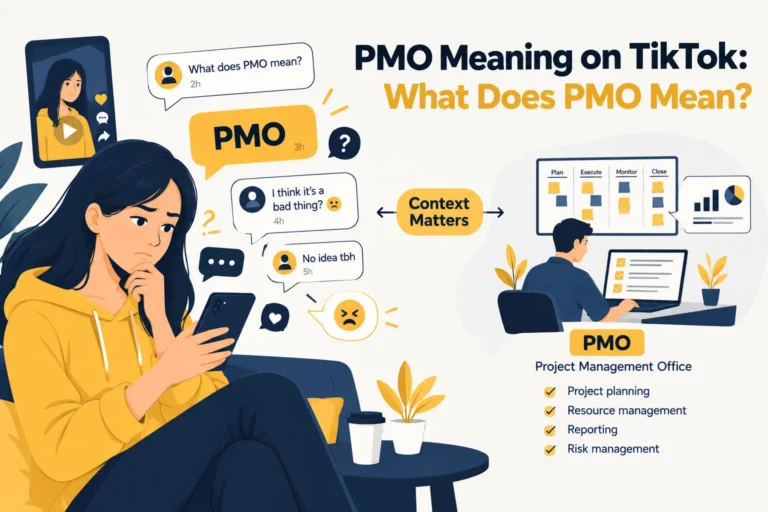
For example, PMO can stand for Prime Minister’s Office in government-related discussions. In texting and social media, it can also be slang for “piss me off.”
The intended meaning depends on where the abbreviation appears. A corporate project document is likely referring to a Project Management Office, while a casual text message may use the slang meaning.
Frequently Asked Questions
What does PMO mean in business?
PMO usually means Project Management Office in business. It refers to a department or function that supports or oversees project management activities within an organization.
What does PMO stand for in a company?
PMO generally stands for Project Management Office. A company may use it to describe the team responsible for project standards, reporting, coordination, and governance.
What is the main purpose of a PMO?
The main purpose of a PMO is to help an organization manage projects more consistently. Its work may include project support, reporting, planning, governance, and performance monitoring.
What are the responsibilities of a PMO?
A PMO may establish project standards, collect progress reports, support resource planning, monitor risks, maintain documentation, and help teams follow project management processes.
Is PMO a department or a job title?
PMO usually refers to an office, department, or organizational function rather than one individual job title. However, people may use the abbreviation informally when referring to the PMO team.
What is the difference between PMO and project manager?
A PMO supports or oversees project management across an organization or group of projects. A project manager is generally responsible for planning and managing a specific project.
What are the three main types of PMO?
The three commonly described types are supportive, controlling, and directive. They differ mainly in the level of authority the PMO has over project teams and processes.
Does a small business need a PMO?
Not necessarily. A small business with a limited number of projects may manage them through existing employees. A dedicated PMO may become useful when coordination, reporting, and project oversight become more difficult.
Final Answer
In business, PMO usually stands for Project Management Office. It is an organizational function that helps companies manage projects through planning support, reporting, standards, governance, and coordination.
The responsibilities can vary depending on the company’s size and project management needs. Some PMOs mainly provide guidance and resources, while others have greater authority over project processes and delivery.
A business may benefit from a PMO when it needs better project visibility, consistent processes, or coordination across multiple teams. The right structure depends on what the organization expects the PMO to accomplish.