PMO Governance: What It Is and How It Works
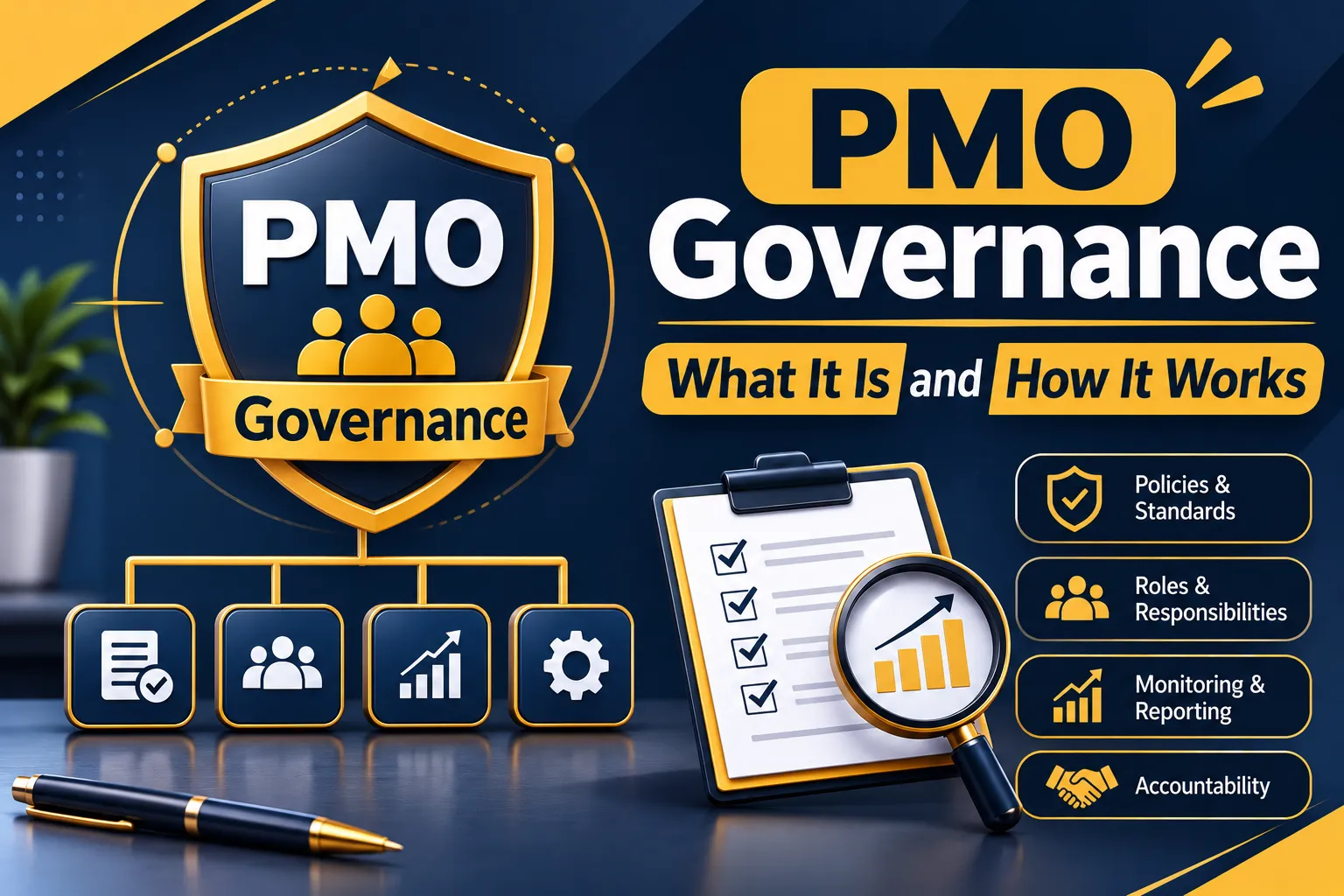
PMO governance defines how a Project Management Office oversees project activities, supports decisions, monitors performance, and maintains accountability within an organization. It establishes the rules and responsibilities that help project teams manage their work according to business requirements.
A PMO governance structure can include approval procedures, reporting standards, project controls, escalation processes, and performance reviews. The exact setup depends on the organization’s size, project complexity, and the authority assigned to its Project Management Office.
What Is PMO Governance?
PMO governance refers to the framework of policies, procedures, responsibilities, and controls used by a Project Management Office to oversee project management activities. It helps establish how projects are reviewed, who makes important decisions, and how progress is monitored.
The purpose is to give project teams and management a clear understanding of their responsibilities. It also helps ensure that project decisions follow agreed procedures and that important risks, changes, and performance issues receive appropriate attention.
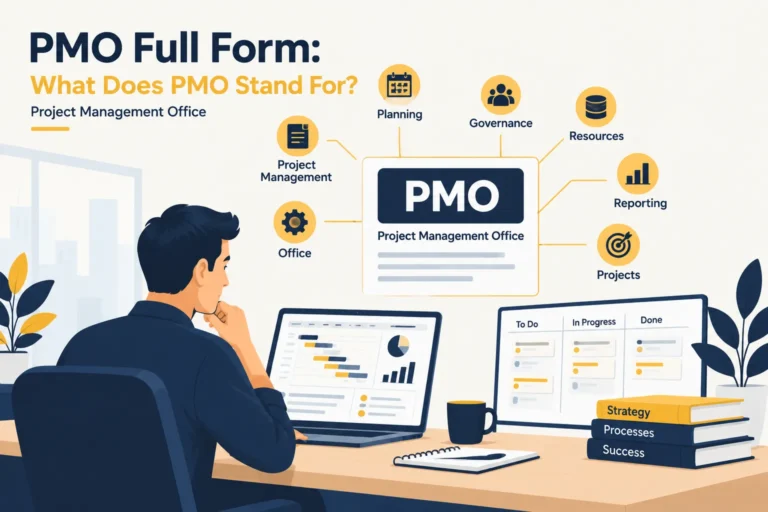
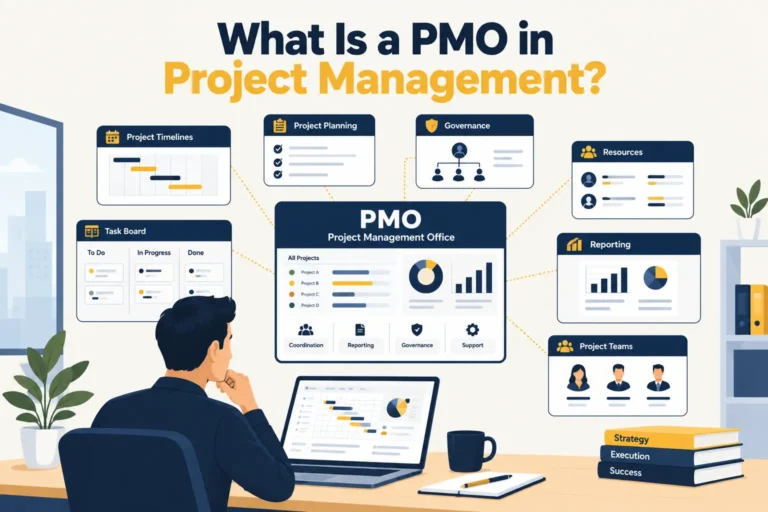
A PMO may manage governance directly or support the people responsible for project decisions. To understand the wider role of this function, see what a PMO is in project management.
What Is a PMO Governance Framework?
A PMO governance framework is the structure an organization uses to guide and control its project management activities. It defines the processes, roles, reporting requirements, approval levels, and decision-making responsibilities that apply to projects.
The framework helps create a consistent approach across project teams. For example, it may specify who approves a project, how budget changes are reviewed, when project reports are submitted, and how serious issues are escalated.
A typical PMO governance framework may include:
- Project approval and authorization procedures
- Defined roles and decision-making responsibilities
- Project reporting standards
- Risk and issue management procedures
- Budget and schedule monitoring
- Change control requirements
- Performance reviews
- Project closure and lessons learned
Not every organization needs the same level of governance. A small company may use a simple approval and reporting structure, while a business managing many projects may require more formal controls.
Why Is PMO Governance Important?
Without clear governance, project teams may follow different procedures, report information inconsistently, or make decisions without knowing who has the authority to approve them. These gaps can make it harder for management to understand project performance and respond to problems.
PMO governance provides a defined structure for managing these responsibilities. It helps organizations maintain visibility, clarify accountability, and keep project activities connected to business priorities.
Common reasons organizations use PMO governance include:
- Clear accountability: Teams understand who owns project tasks, decisions, and approvals.
- Consistent processes: Projects follow agreed procedures for planning, reporting, and control.
- Better visibility: Management receives regular information about project progress and performance.
- Risk oversight: Important risks and issues can be recorded, monitored, and escalated.
- Controlled changes: Proposed changes can be assessed before affecting project scope, cost, or schedules.
- Informed decisions: Leaders have access to project information when reviewing priorities and performance.
Governance does not guarantee that every project will succeed. Its purpose is to provide a clear management structure that helps teams identify problems and make decisions using reliable information.
Main Components of PMO Governance
A PMO governance framework usually brings several management activities together. Each component addresses a different part of project oversight and helps define how the organization manages its projects.
1. Roles and Responsibilities
Governance begins with clear responsibilities. Project managers, PMO staff, department heads, sponsors, and senior management should understand what they are expected to do and which decisions they can make.
For example, a project manager may handle day-to-day project decisions, while a sponsor approves major changes or additional funding. The PMO may maintain reporting standards and coordinate governance reviews.
Clear responsibilities reduce confusion when a project requires approval or management intervention.
2. Project Approval and Authorization
Organizations need a process for deciding which projects can begin and who has the authority to approve them. The process may involve reviewing the business case, expected benefits, estimated costs, resource requirements, and potential risks.
The PMO may coordinate the review and check whether the required information is available. Final authorization usually rests with the designated sponsor, management team, or approval body.
3. Reporting and Performance Monitoring
Project reporting gives management information about ongoing work. A PMO may define what project managers need to report, how frequently updates are submitted, and which performance indicators should be tracked.
Reports commonly cover schedule progress, budget status, completed milestones, current risks, open issues, and decisions requiring attention.
Using consistent reporting formats makes it easier to compare projects and identify areas where management support may be needed.
4. Risk and Issue Management
Risk and issue management helps organizations identify potential problems and respond to existing ones. A PMO may establish procedures for recording risks, assigning owners, tracking actions, and escalating concerns.
Project managers generally handle risks within their projects, but serious issues may need attention from department leaders or senior management.
The governance framework should make it clear when an issue can be handled by the project team and when it needs to be escalated.
5. Change Control
Projects can change after approval because of new requirements, unexpected problems, budget adjustments, or changes in business priorities. A governance framework defines how these changes are submitted, assessed, approved, and documented.
The PMO may maintain the change request process and make sure the relevant decision-makers receive the necessary information.
This helps prevent major changes from being introduced without understanding their possible effects on project scope, cost, resources, or delivery dates.
6. Resource and Budget Oversight
Project governance can also cover how resources and budgets are monitored. The PMO may collect information about resource requirements, spending, and potential conflicts across different projects.
Management can use this information to review whether projects have the resources they need and whether adjustments are necessary.
The PMO’s authority over budgets and resource allocation varies. Some offices provide reports and recommendations, while others have a more direct role in coordinating these decisions.
7. Project Reviews and Closure
Governance continues throughout the project lifecycle, including the final stages. Project reviews can assess progress, outstanding issues, deliverables, and compliance with agreed requirements.
At closure, the PMO may help confirm that documentation is complete, final reports are submitted, and lessons learned are recorded.
These records can provide useful information when the organization plans or manages similar projects in the future.
How Does PMO Governance Work?
PMO governance usually operates through a series of connected activities. The organization establishes its governance rules, applies them during project planning and execution, and reviews performance as work progresses.
A typical process may look like this:
- Define governance requirements: Establish the policies, standards, and controls that projects must follow.
- Assign responsibilities: Identify project owners, sponsors, PMO staff, and approval authorities.
- Review project proposals: Assess requests before projects receive authorization.
- Set reporting requirements: Define what information project teams must provide and when.
- Monitor project performance: Review progress, budgets, milestones, risks, and issues.
- Manage changes and escalations: Route important decisions to the appropriate people.
- Review project outcomes: Confirm completion, document results, and capture lessons learned.
The PMO may coordinate these activities, but it does not necessarily make every decision. Its role depends on the governance model and the level of authority given to the office.
PMO Governance Roles and Responsibilities
Different people contribute to PMO governance, and their responsibilities should be clearly defined. The exact structure varies between organizations, but several roles are commonly involved.
| Role | Governance Responsibility |
|---|---|
| PMO Manager | Oversees PMO procedures, reporting, and governance activities |
| Project Manager | Manages project delivery, updates, risks, and project documentation |
| Project Sponsor | Supports the project and makes or approves key decisions |
| Steering Committee | Reviews project performance and provides direction on major matters |
| Senior Management | Sets organizational priorities and approves significant decisions |
| PMO Analyst or Coordinator | Supports reporting, documentation, tracking, and process administration |
A small organization may combine several of these responsibilities within a few roles. Larger organizations may have dedicated governance teams, committees, or approval groups.
Types of PMO Governance Structures
The governance structure often reflects the authority of the PMO. Some offices provide guidance, while others establish mandatory controls or directly oversee project management.
Supportive PMO Governance
A supportive PMO provides recommended procedures, templates, guidance, and training. Project managers generally retain control over their projects, while the PMO helps them follow useful management practices.
This approach may suit organizations where teams already manage projects independently but need shared resources and consistent guidance.
Controlling PMO Governance
A controlling PMO establishes standards and monitors whether project teams follow required procedures. It may define reporting rules, documentation requirements, approval steps, and governance reviews.
Organizations may use this approach when they need greater consistency and visibility across projects.
Directive PMO Governance
A directive PMO has greater authority over project management. It may assign project managers, direct project teams, and take responsibility for managing project delivery.
This structure gives the PMO a more direct role in project execution and oversight.
The differences between these structures are explained further in our article about the different types of PMO.
PMO Governance vs Project Governance
PMO governance and project governance are closely related, but they do not always refer to the same thing. PMO governance focuses on how the Project Management Office supports or oversees project management across an organization.
Project governance focuses on the decision-making structure and controls for an individual project. It defines who approves changes, who is accountable for delivery, how issues are escalated, and how project performance is reviewed.
| PMO Governance | Project Governance |
|---|---|
| Applies to the PMO’s oversight function | Applies to an individual project |
| Establishes or supports common standards | Defines project-level rules and controls |
| May consolidate reporting across projects | Monitors the performance of one project |
| Supports organization-wide consistency | Supports accountability within the project |
| May coordinate governance reviews | Handles project-specific approvals and decisions |
The two structures should work together. The PMO can provide common governance standards, while individual projects apply those standards according to their specific requirements.
PMO Governance vs PMO Process
PMO governance and the PMO process serve different purposes. Governance defines the rules, authority, and accountability behind project oversight, while the PMO process describes the activities used to manage or support projects.
For example, governance may establish who can approve a project budget change. The PMO process explains how the change request is submitted, documented, reviewed, and communicated.
Both are important because a process needs clear decision-making rules, and governance needs practical procedures that teams can follow.
You can read more about the PMO process and how it works for a closer look at the operational workflow.
What Is a PMO Governance Model?
A PMO governance model describes how authority, responsibilities, and oversight are organized within an organization. It helps determine who makes decisions, how projects are reviewed, and how the PMO interacts with project teams and senior management.
A governance model may include:
- A central PMO responsible for common standards and reporting
- Department-level PMOs supporting individual business areas
- Project-level governance groups overseeing specific initiatives
- Steering committees reviewing major project decisions
- Defined escalation routes for risks and issues
Some organizations use a centralized model, where one PMO provides common direction across the business. Others use a decentralized approach, where departments maintain their own project management functions.
The appropriate model depends on the organization’s structure, the number of projects it manages, and the level of control required.
Common PMO Governance Challenges
Even a well-defined governance framework can face problems during implementation. Difficulties often occur when responsibilities are unclear, procedures become too complicated, or management does not consistently support the agreed structure.
Common challenges include:
- Unclear approval authority
- Inconsistent reporting across project teams
- Too many unnecessary approval steps
- Limited communication between departments
- Poor documentation of decisions
- Risks and issues that are not escalated on time
- Governance procedures that do not match project requirements
- Lack of management support
These problems can make governance slower and less useful. Organizations should regularly check whether their procedures help teams manage projects or simply create additional administrative work.
How to Improve PMO Governance
Improving PMO governance starts with understanding how project decisions and oversight currently work. Organizations should identify gaps in accountability, reporting, approvals, and communication before introducing new rules.
Practical improvements may include:
- Clarify responsibilities: Make sure everyone understands their role and decision-making authority.
- Simplify approval procedures: Keep review steps appropriate to the size and risk of each project.
- Standardize reporting: Use consistent formats that provide useful information without unnecessary detail.
- Improve escalation: Define when risks and issues need management attention.
- Maintain accurate records: Document approvals, major changes, and important decisions.
- Review governance regularly: Update procedures when organizational needs or project conditions change.
- Involve stakeholders: Get feedback from project managers and teams who use the framework.
Good governance should provide enough oversight to support accountability without preventing teams from completing their work efficiently.
Does Every Organization Need PMO Governance?
Not every organization needs a formal governance framework with several approval levels and dedicated committees. A small business managing a limited number of projects may be able to use straightforward procedures for project approval, reporting, and issue escalation.
However, governance becomes more important when an organization manages multiple projects, works across departments, or needs consistent oversight of budgets, risks, and performance.
The appropriate approach should match the organization’s needs. A simple framework can be effective when it clearly defines responsibilities and provides management with the information required to make decisions.
Frequently Asked Questions
What is PMO governance?
PMO governance is the framework of responsibilities, policies, procedures, and controls used by a Project Management Office to support or oversee project management activities.
What is a PMO governance framework?
A PMO governance framework defines how projects are approved, monitored, reported, and controlled. It also identifies the people responsible for project decisions and oversight.
What are the main components of PMO governance?
Common components include roles and responsibilities, project approvals, reporting standards, risk management, change control, performance monitoring, and project closure procedures.
What is the purpose of PMO governance?
Its purpose is to provide clear accountability, consistent project oversight, and reliable information for management decisions. It helps organizations monitor projects according to agreed requirements.
What is the difference between PMO governance and project governance?
PMO governance focuses on the Project Management Office’s oversight across projects or an organization. Project governance defines the decision-making and control structure for an individual project.
Who is responsible for PMO governance?
The PMO manager or PMO team often coordinates governance activities. Project managers, sponsors, steering committees, and senior management also have responsibilities depending on the organization’s structure.
What is a PMO governance model?
A PMO governance model describes how authority, responsibilities, approvals, and oversight are organized. It determines how the PMO works with project teams and organizational leadership.
How can an organization improve PMO governance?
An organization can improve governance by clarifying responsibilities, simplifying approvals, standardizing reports, maintaining accurate records, and reviewing procedures regularly.
Final Answer
PMO governance defines how a Project Management Office supports project oversight, accountability, reporting, and decision-making. It provides a framework for establishing responsibilities, reviewing performance, managing risks, and controlling important project changes.
The structure can differ between organizations. Some PMOs mainly provide guidance and reporting support, while others have greater authority over project standards and delivery.
An effective PMO governance framework should match the organization’s project requirements and provide clear oversight without creating unnecessary administrative work.